So after the earthquake of 1837
they all moved to Jerusalem and started the Ashkenazi Yishuv of
Jerusalem.
So when Rabbi Pinchas died in
Dokshitz, his son Rabbi Alleh (that's Yiddish for Eliahu) was elected
Rabbi of Dokshitz. Of course Alleh was named for the pride of the
family, the Vilna Gaon. The stories in the family about Rabbi Eliahu
Kremer (Alleh) were that he was a young man when he came to Eretz
Israel. I am not quite sure of that and am not sure if Beileh was his
first wife because when he came to Jerusalem he left grown up sons in
Europe and arrived only with his youngest daughter Mir'l. In Jerusalem
he had another son, Menachem Mendel Kremer. Another story of Rabbi
Eliahu Kremer is that he was very rich and sensitive. He insisted on
using tableware of silver and sleeping on silk bed sheets.
On the other hand, Rabbi Eliahu
was very liberal: he insisted on teaching his daughter. This is
remarkable - in Jerusalem girls were only taught basic reading so they
can read their Sidur and pray, and basic arithematic so they can work
and provide for the family when their husbands learned Torah. Not Rabbi
Eliahu - he taught his daughter exactly as he taught his sons:
language, Tora and Gemorah, and arithematic. He said he was doing this
so "she can marry a great Rabbi, like his close Yeshiva friend, Rabbi
Eliahu Neuman". So Mirel admired Rabbi Yaacov Tzvi (Hirsch) Neumann
from her early childhood. Eliahu died when Mirel (her full name was
Sheineh Mirel) was a girl.
Story #3: There is a story,
started by Mirel, that when she lived in Dokshitz as a young girl,
there were many gypsies near Dokshitz. Since they used to steal, Mirel
was ordered by her mother Beileh never to allow a gypsy in the house.
One freezing morning, when Mirel was alone at home in Dokshitz, an old
gypsy woman knocked on the door, begging for bread. Mirel, against her
instructions, pitied her and let her in, and served her a warm soup and
bread. The grateful gypsy wanted to reward Mirel so she read her
future. She predicted that she'll live in a far away country, and she
would marry two old men. Well, soon the first prophecy was fulfilled:
Rabbi Eliahu took his wife and daughter and moved to Jerusalem where he
settled in the Old City. Of course, then it was not called the "Old
City because there was no "new city." After his death many wanted to
marry the beautiful and clever girl, but she refused them all. After
Rabbi Hirsch Neumann's wife Leah died, she said she'll only marry him.
He had no children since Leah couldn't give him children. Of course
Beileh, her mother, refused because by then he was an old man, and she
was a young girl. He himself, as her trustee by her father's will,
refused and tried to arrange suitable marriages for her. However she
was very stubborn and refused them all, so in the end she got her wish
and married Rabbi Yaacov Tzvi Neumann. She bore him children, one after
the other, but they all died. There is a story that he sent her to
Vienna to his brother Dr. Karl Neumann, who was Kaiser Franz Josef's
physician. The story says that Mirel had met the Kaiser before, in
Jerusalem when he visited, and he saw that the building of the Churveh
synagogue in the Old City was not finished and had no roof. He asked
for the reason, and there was a hush, and then Mirel said, in German
that "the synagogue has taken off its
hat for the Kaiser." The Kaiser who
always had an eye for a beautiful woman, roared wth laughter and
understood the reason, and before he left Jerusalem he left the Jews
enough money to finish the synagogue. Still the name "Churveh" stuck
with the synagogue. Somehow, in books, this story is attributed to
Rabbi Nisan Beck, but the family story is that it was Mirel who
received the money from the emperor.
Story #4: Anyhow, when my great
grandfather sent Mirel to Vienna to his brother, Mirel took a walk one
Friday morning in the city park. The Kaiser too had the habit of
walking in the park, so when he saw Mirel he stopped, and they had a
long serious talk. So long in fact, that Mirel never returned home for
lunch. So long, that when it was nearly time to light Shabat candles,
Mirel was still missing and the family was worried. Then just before
Shabat the Kaiser's carriage drew to the physician's home. Knowing the
carriage, Karl rushed out thinking he is needed in court, when the
carriage door opened and out stepped the Kaiser, and then Mirel. The
Kaiser thanked Mirel for the day, bid the family Shabat Shalom and
drove off.
I was told once that someone of
the family doubted the story so he looked in old newspapers and found
the story recorded.
Story #5: Now Mirel married Rabbi
Hirsch Neumann and lost many pregnancies, but in the end she had two
daughters ( one died at the age 5) and one son, Moshe and one son,
Moshe Eliahu Neumann, my grandfather. After her husband's death she
married his friend, and her other trustee, Rabbi Meyer Maizel, and with
him she had another girl. So the gypsy's prophecy came true.
Mirel was known to be beutiful,
quick, with a retort ready for any question, knowledgeable so that when
women came to ask the Rabbi questions, she was the one who replied. She
was known as "Rebitzin of the Old City" and admired by all. She died in
1935 and each girl born in the family in the years after got the name
Miriam, after Mirl. When I was born my father's family insisted I be
Miriam, after Mir'l. My mother thought Aviva was appropriate to a girl
born in Pessach, so they all settled for Aviva Miriam. But I had
cousins like Miriam, Mickie, Merry, Mimmie and Mirie. All of course
named for Mirel, my great grandmother.
If I think of other stories of
Mirel, I'll write.
Wait - there is the story, again
started by Mirel, or at least we know it because Mirel used to tell it
to my father and grandfather: the story is that when a Neumann (or
Neeman) dies, a dog is howling. It was like that in the Old City, that
a dog howled when my great grandfather died. But Mirel who had lost
many children, claimed the story was true. I heard it many times from
my great-aunt who heard it from her mother Mirel, and from my father. I
remember when my grandfather died, I accompanied my father when he went
to issue a burial permit. A German Shepherd dog was sitting on the
opposite pavement. My father looked at it and repeated the story, which
I heard many times. I remember remarking that it is very quiet, and we
entered the building. Just as we mounted the first step, the dog pulled
back his head and howled like a wolf. I swear I froze on the spot, but
my father nudged me, whispered "I told you so" and mounted the stairs.
A dog, or maybe the same one howled when my uncle Matitiahu died, and -
I swear - when my father died. I was sitting at home, after the
funeral, when I heard the howling. My uncle Itzchak claims it is
nonsense but I can vouch that I heard it THREE times at deaths of my
grandfather, my uncle and my father.
Aviva Neeman -
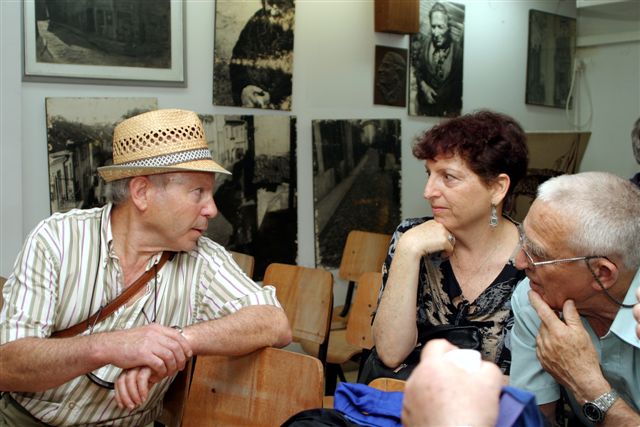
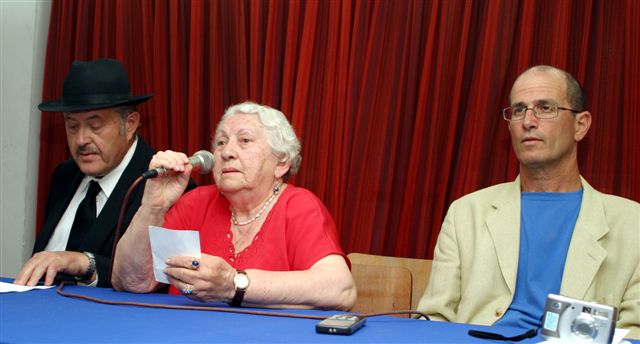
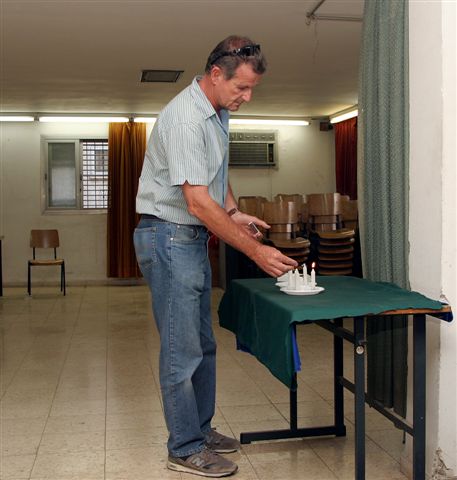
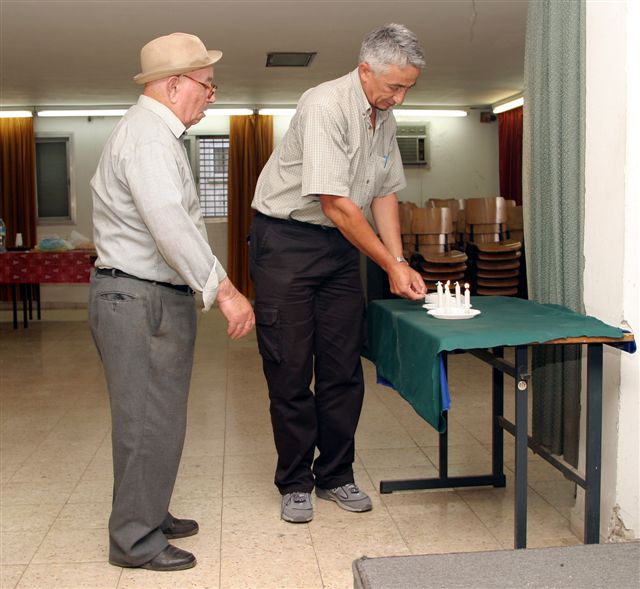
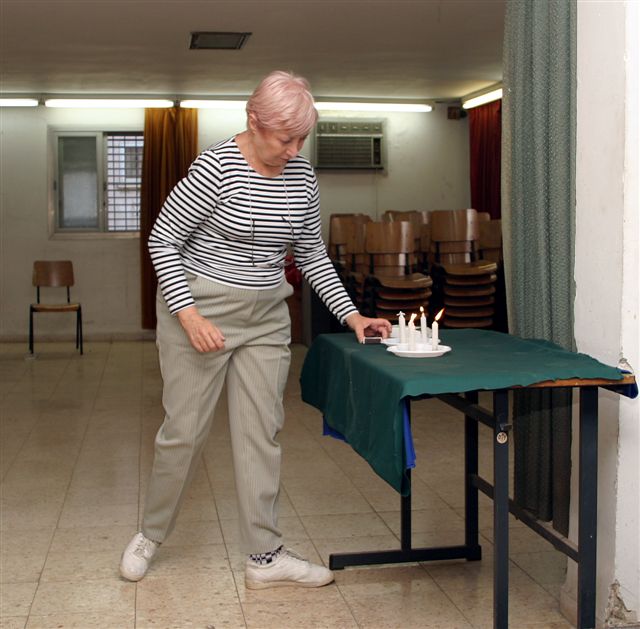
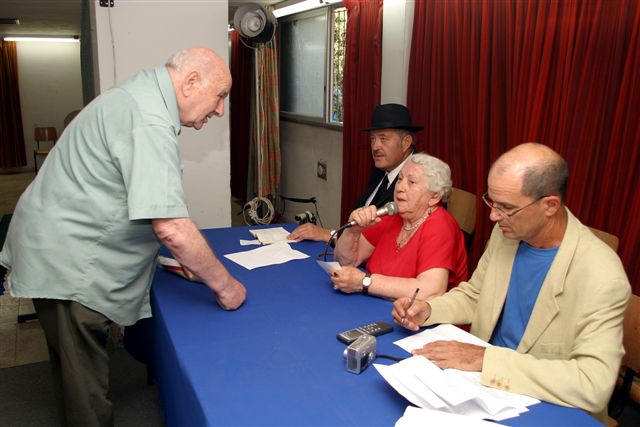
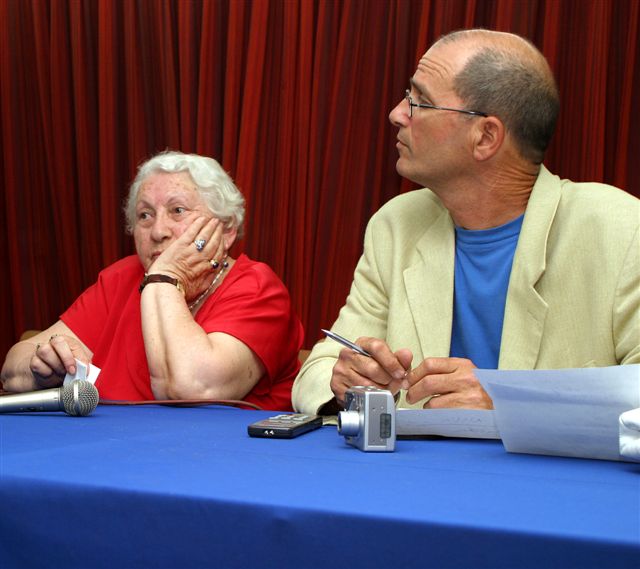
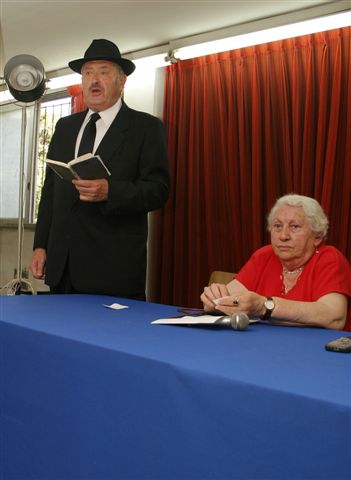
- On May 30, 2004, a
meeting and memorial service for the Victims of the Shoah in Dokshitz and Parafianov took
place in Tel Aviv.
-
- Photos appear below.
-
-
Photo 1
-
-
Photo 2
-
-
Photo 3
-
-
Photo 4
-
-
Photo 5: Aviva Neeman
-
-
Photo 6
-
-
Photo 7
-
-
Photo 8
-
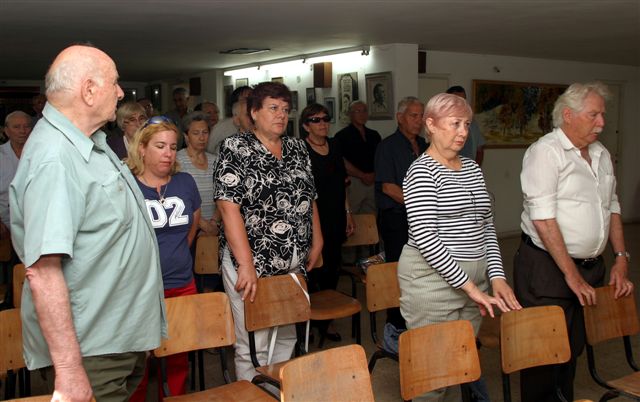
-
Photo 9
-
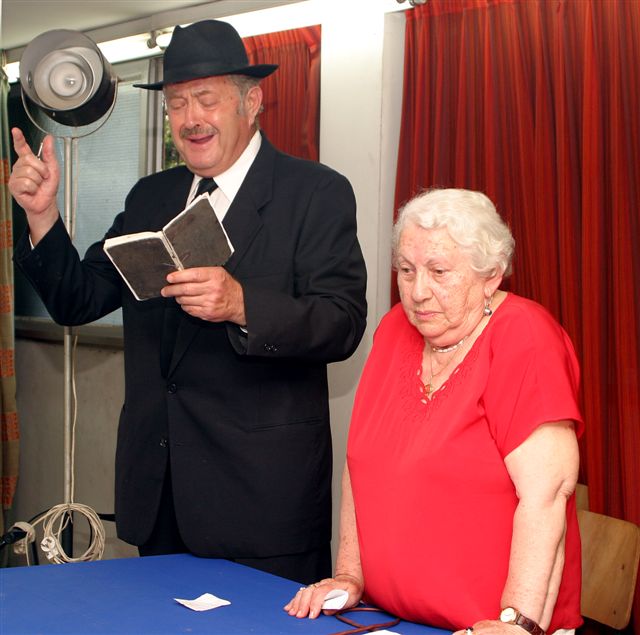
-
Photo 10
-
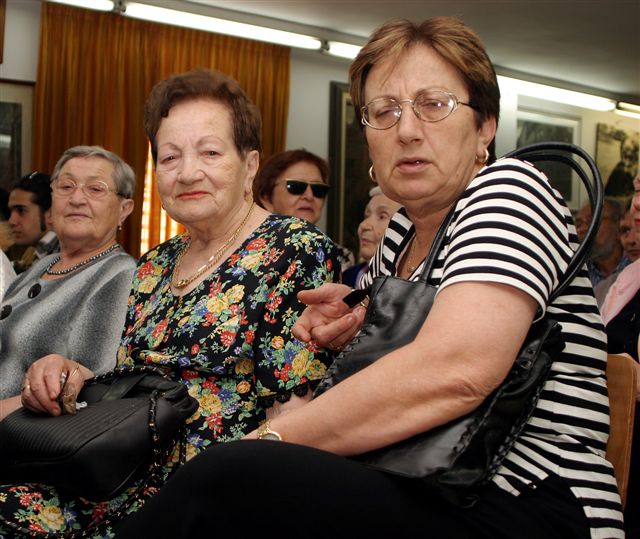
-
Photo 11
-
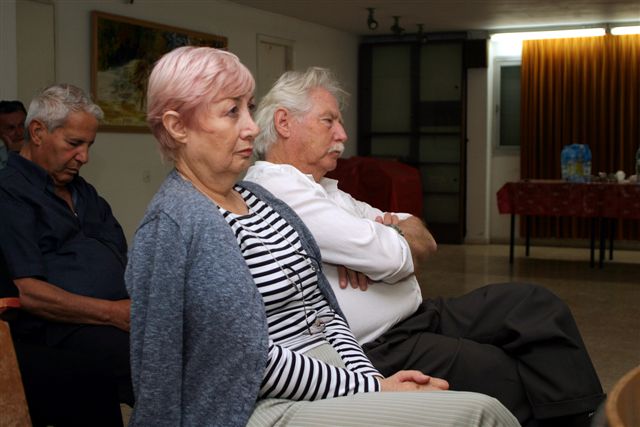
-
Photo 12
-
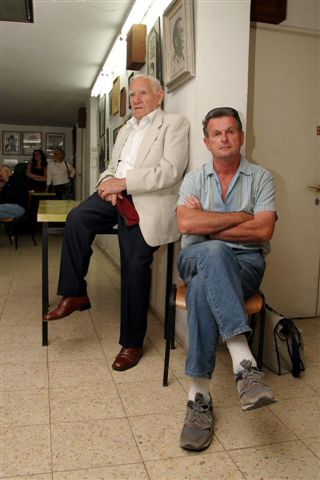
-
Photo 13
-
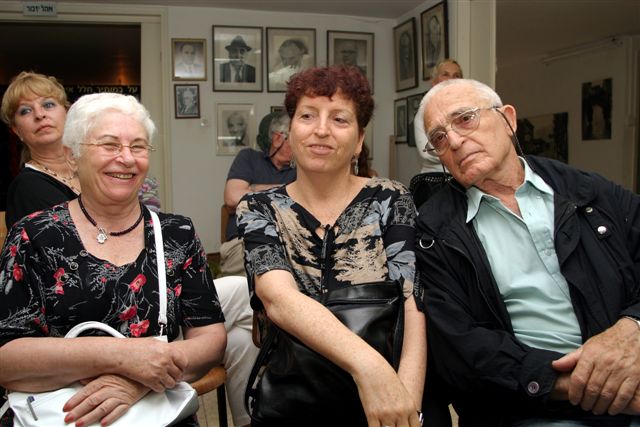
-
Photo 14
-
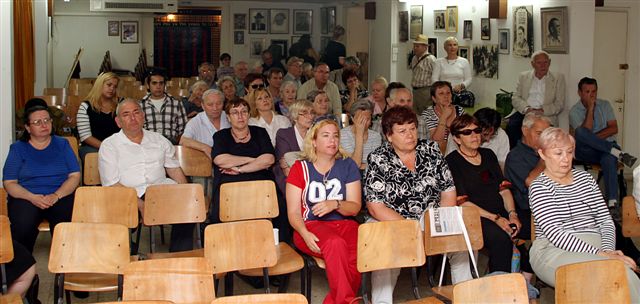
-
Photo 15
-
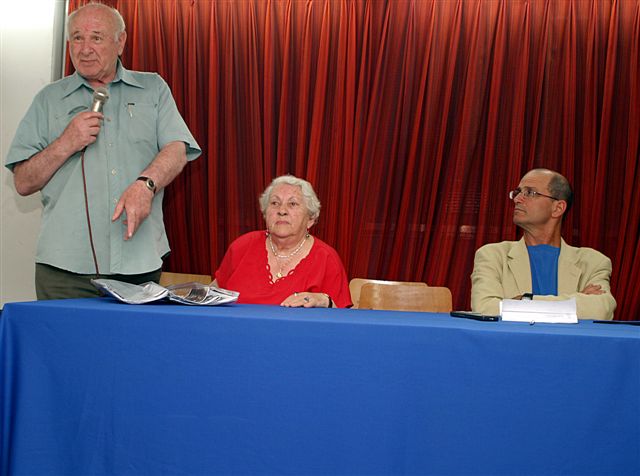
-
Photo 16
-